Choose by the floor and by what is on it. Many sites need two of these machines, used in order: the sweeper first, then the scrubber.
- Sweeper: removes dirt, dust and litter from hard floors, including concrete and semi-outdoor areas.
- Scrubber: scrubs hard floors and leaves them dry.
- Vacuum: cleans carpet and hard floors without water, and is the quietest of the three.
Each machine does a different job.
The three machines are not better or worse versions of each other. Each one is made for a different floor and a different kind of dirt.
SweeperRemoves dirt and litter from hard floor, without water 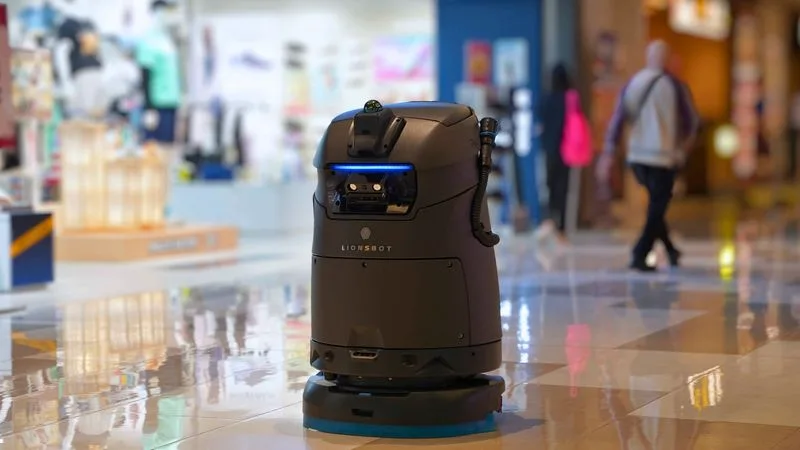
ScrubberScrubs and dries hard floor 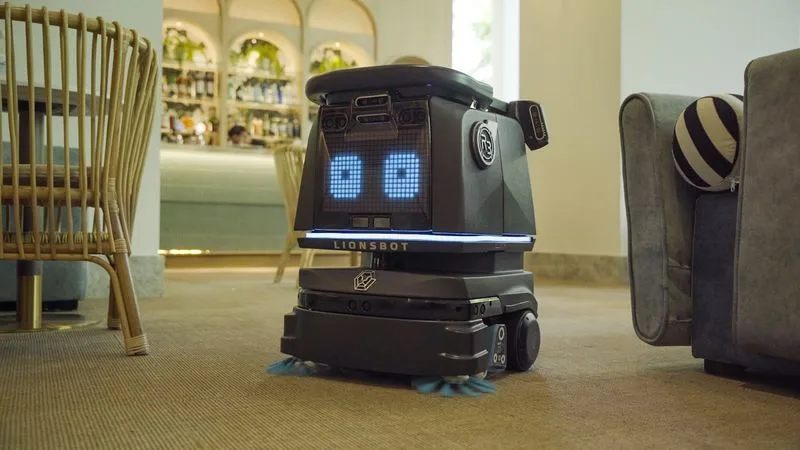
VacuumRemoves dust from carpet and hard floor, without water
| Sweeper | Scrubber | Vacuum | |
|---|---|---|---|
| What it does | Removes dirt, dust and litter | Scrubs the floor, then dries it | Removes dust and dirt without water |
| Floor | Hard floor, such as concrete and tiles | Hard floor | Carpet and hard floor |
| Uses water | No | Yes | No |
| Typical sites | Warehouses, parking garages, loading bays, transport hubs | Malls, airports, hospitals, warehouses | Offices, hotels, libraries |
| LionsBot robot | S3 | R5, R3 Scrub Pro | R3 Vac |
A sweeper removes dirt and litter.
A floor sweeper, or sweeper machine, uses brushes to move dirt and litter into a bin. It does not use water, so it leaves no wet floor behind.
It is the right machine where the floor is rough or dusty, or where litter is the main problem. That describes warehouses, parking garages, loading bays and the covered areas between indoors and outdoors.
Sweepers come in three forms. A push or walk-behind sweeper is moved by a cleaner and suits small areas. A ride-on sweeper carries a driver and suits large areas. A robot floor sweeper sweeps large areas on its own, so no cleaner has to push or drive it.
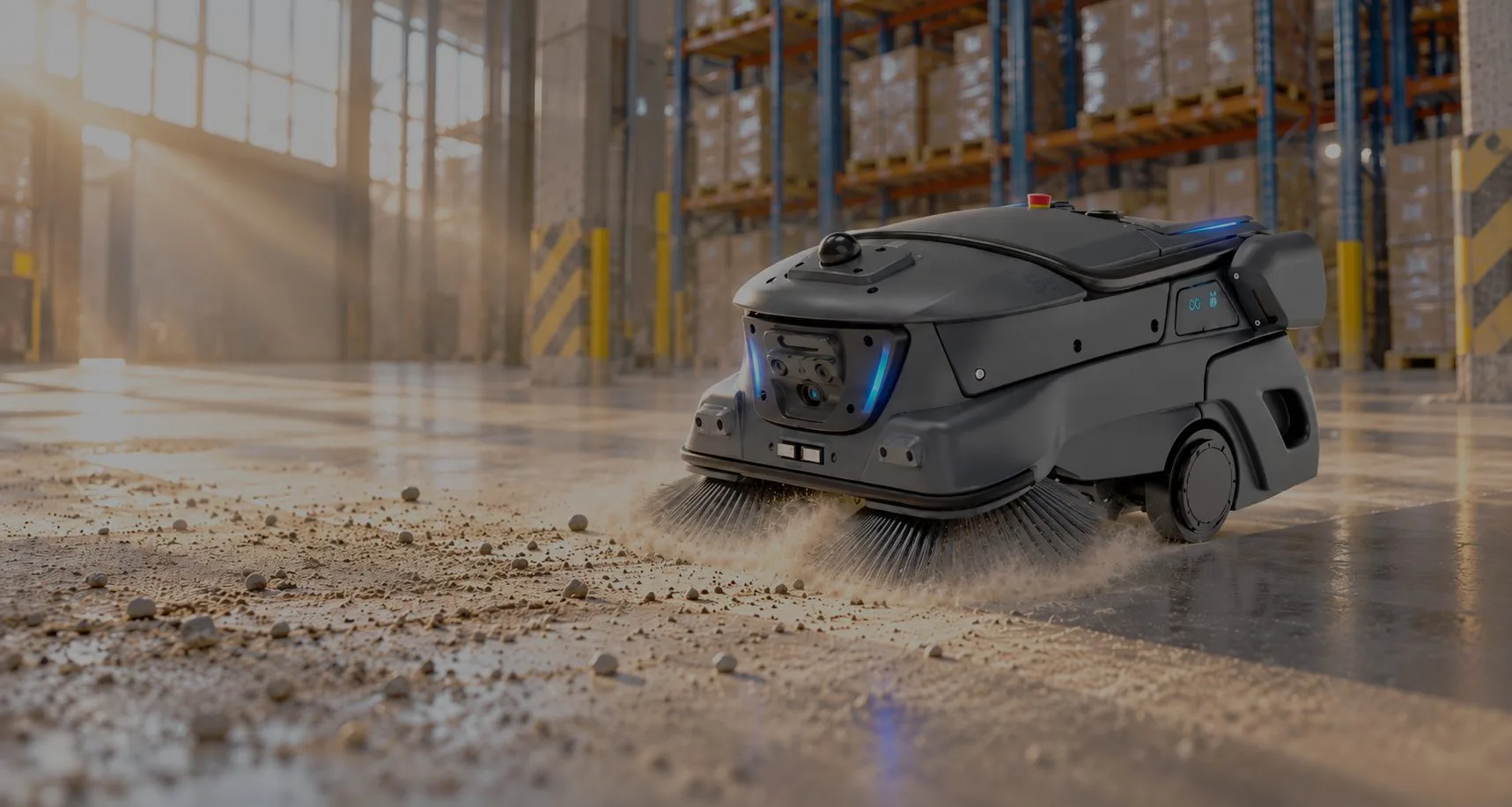
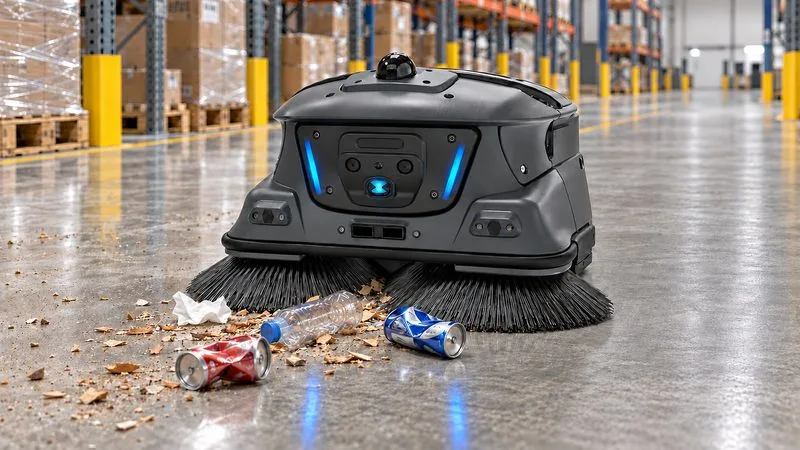
The LionsBot S3 is a robot sweeper for warehouses and other large sites. It has a 30.7 in (780 mm) cleaning width and 0 in (0 mm) edge cleaning, so it cleans right up to the wall.
It collects fine dust and larger litter such as tissue, wood chips, bottles and cans into a trash bin that holds about 10.6 gal (40 L), and a fan keeps fine dust in the bin instead of releasing it into the air.
It climbs slopes of up to 8° and works indoors and semi-outdoors. It is not recommended for areas fully open to the weather.
What a sweeper does not do. It does not scrub the floor. Stains, grease and sticky marks stay. It is not made for carpet.
A scrubber scrubs hard floors and leaves them dry.
A scrubber cleans the floor with a scrubbing brush and then dries it with a squeegee, so the floor is dry behind the machine.
It is the right machine for hard floors that must be scrubbed, not only cleared: shopping malls, airport terminals, hospital corridors and warehouse floors that are already swept.
The LionsBot R5 cleans an average of 14,000 sq ft (1,300 m²) an hour and up to 53,820 sq ft (5,000 m²) on one charge, on a 20.5 in (520 mm) path.
The R3 Scrub Pro is a compact scrubber for aisles, corridors and other narrow spaces. It cleans a 14.4 in (366 mm) path, or 26.9 in (682 mm) with its side brush fitted, at 8,611 to 12,917 sq ft (800 to 1,200 m²) an hour.
What a scrubber does not do. It is not made for large litter. Bottles, cans, wood chips and grit can block the squeegee and leave water lines on the floor. On a dirty or dusty floor, the litter should be removed first.
Scrubbers also come as walk-behind, ride-on and robot machines.
A vacuum cleans carpet and hard floors without water.
A vacuum lifts dust and dirt into a bag or tank with suction. It works on carpet as well as hard floor.
It is the quietest of the three machines, so it can work while people are in the room. That makes it the right machine for offices, hotels and libraries.
The LionsBot R3 Vac is a commercial robot vacuum. It averages 61.7 dB and cleans 5,382 to 10,764 sq ft (500 to 1,000 m²) an hour, up to 15,070 sq ft (1,400 m²) on one charge. Its cleaning path is 13.8 in (350 mm), or 21.7 in (550 mm) with its side brush fitted.
What a vacuum does not do. It does not scrub the floor, and it is not made for wet spills or for large litter such as bottles and cans.
Many sites need two machines, used in order.
Most sites have more than one kind of floor, so most sites need more than one kind of machine.
Sweep first, then scrub. On a dusty or littered hard floor, the sweeper cleans first and the scrubber follows. The scrubber then scrubs a clear floor. The LionsBot S3 can signal an R5 to scrub the zone it has just swept, so the order is kept without anyone sending the next robot.
Vacuum the carpet, scrub the hard floor. Offices and hotels often have carpet in rooms and hard floor in lobbies and corridors. A vacuum and a scrubber share the site.
All our robots report to LionsCloud, LionsBot's fleet software, so one operator can schedule and check every robot on site, whatever the type.
Four questions decide which machine you need.
- What is the floor? Carpet needs a vacuum. Hard floor that needs scrubbing calls for a scrubber. Rough concrete usually needs a sweeper.
- What is on the floor? Litter, grit and dust need a sweeper. Spills, grease and marks need a scrubber. Dust in carpet needs a vacuum.
- Is the area indoors or partly outdoors? Of the LionsBot range, only the S3 sweeper is built for semi-outdoor areas. It detects rain and heads back to its base.
- Are people present while it cleans? Then sound level matters. The R3 Vac averages 61.7 dB, the R5 70 dB and the R3 Scrub Pro 71 dB.
If the answers point to more than one machine, that is normal. Tell us about your floors and we will tell you which robots fit.