ISSA Show North America is one of the cleaning industry's biggest events in North America, bringing facility managers, cleaning contractors and distributors together to see what is new. This year it ran from 17 to 19 November 2026 at Mandalay Bay in Las Vegas, and LionsBot was there at booth 3842.
Meet the S3
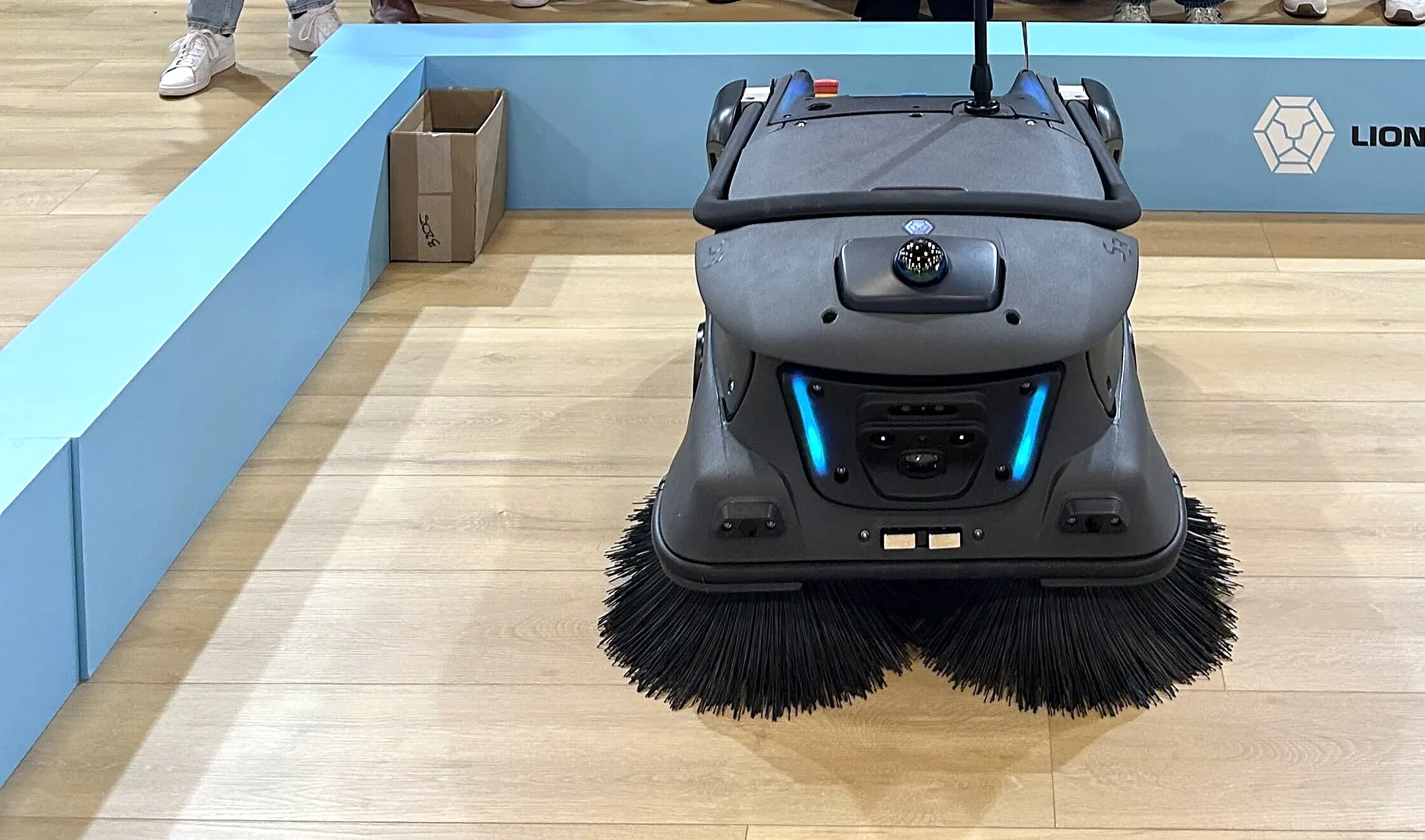
The S3 is our new autonomous sweeper for large, dusty sites such as warehouses and retail centers. Before ISSA we teased it only as “a fourth machine” to be revealed when the doors opened. In Las Vegas, visitors got their first look at it in person.
The S3 sweeps up fine dust and larger litter such as tissue, wood chips, bottles and cans in one pass, into a 10.6 gal trash bin. SpotSense™ spots where litter has gathered and goes straight to it, instead of only covering the floor evenly. High-flow ventilation keeps fine dust in the bin rather than in the air. With a 30.7 in cleaning width, a maximum cleaning rate of 24,757 sq ft an hour and up to 10 hours of run time, it is built for big floors.
It also works alongside the rest of the range. The S3 sweeps first and the R5 scrubs after, so a site gets more cleaning done without overlapping work or someone tracking every robot by hand.
The full range, cleaning live
The S3 was joined on the stand by the rest of the range, the R5, the R3 Scrub Pro and the R3 Vac, with live demos on all three days. Visitors could watch the robots handle a real floor and ask our team how they would fit their own sites.
AI Teamwork on the Floor
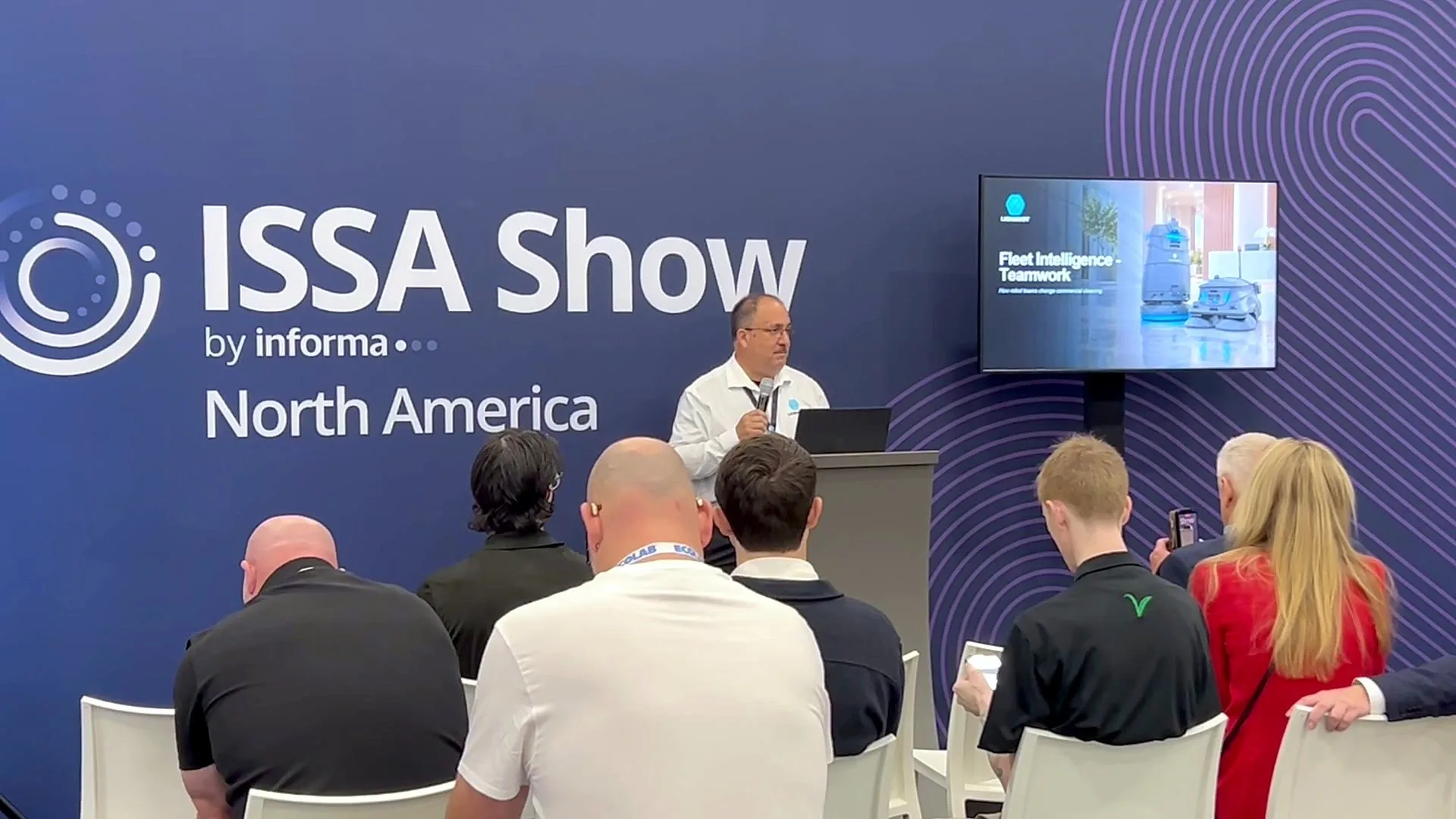
In our education session, “AI Teamwork on the Floor: How Multi-Robot Coordination is Changing Commercial Cleaning”, Kregg Woosley, our Regional Sales Manager for the Midwest, looked at what happens after a site's first robot.
He opened with the idea that ran through the whole talk: “One robot is a pilot. A team is an operation.”
A single robot stops short for three reasons: sites outgrow one machine, when it stops the job stops, and someone still has to run it. None of these are robot problems. They are operations problems.
Kregg closed with five questions to answer before adding a second robot:
- Sequence: which tasks have to happen in order?
- Coverage: what happens to a zone when a robot stops?
- Zones: which areas suit robots, and which stay manual?
- Oversight: who runs the fleet day to day?
- Proof: how will you show the work to clients?
Answer these first, and choosing the robot gets much easier.
Kregg then walked through what a night shift looks like when the robots share the work:
- 10 PM: two S3s start sweeping different zones.
- 12 AM: one S3 docks to charge, and the other takes over its zone.
- 2 AM: the R5s take over scrubbing once the S3s are done.
- 5 AM: the R5s finish, and the cleaning reports are ready in LionsCloud.
Thank you, Las Vegas
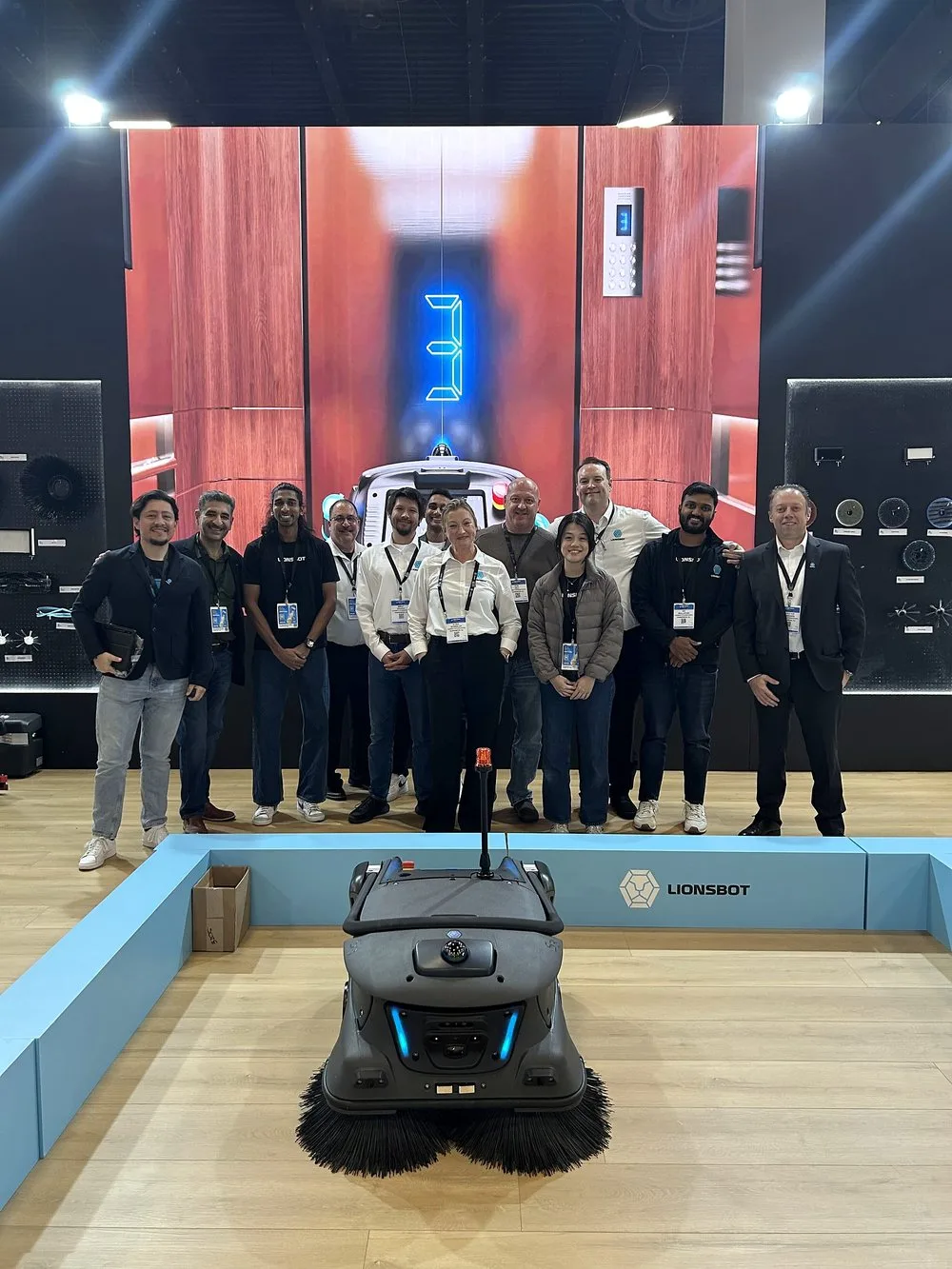
Thank you to everyone who came to booth 3842, joined our session or stopped to talk about carrying LionsBot. If we met at the show, or you missed us, our team is happy to talk about which robots suit your site.