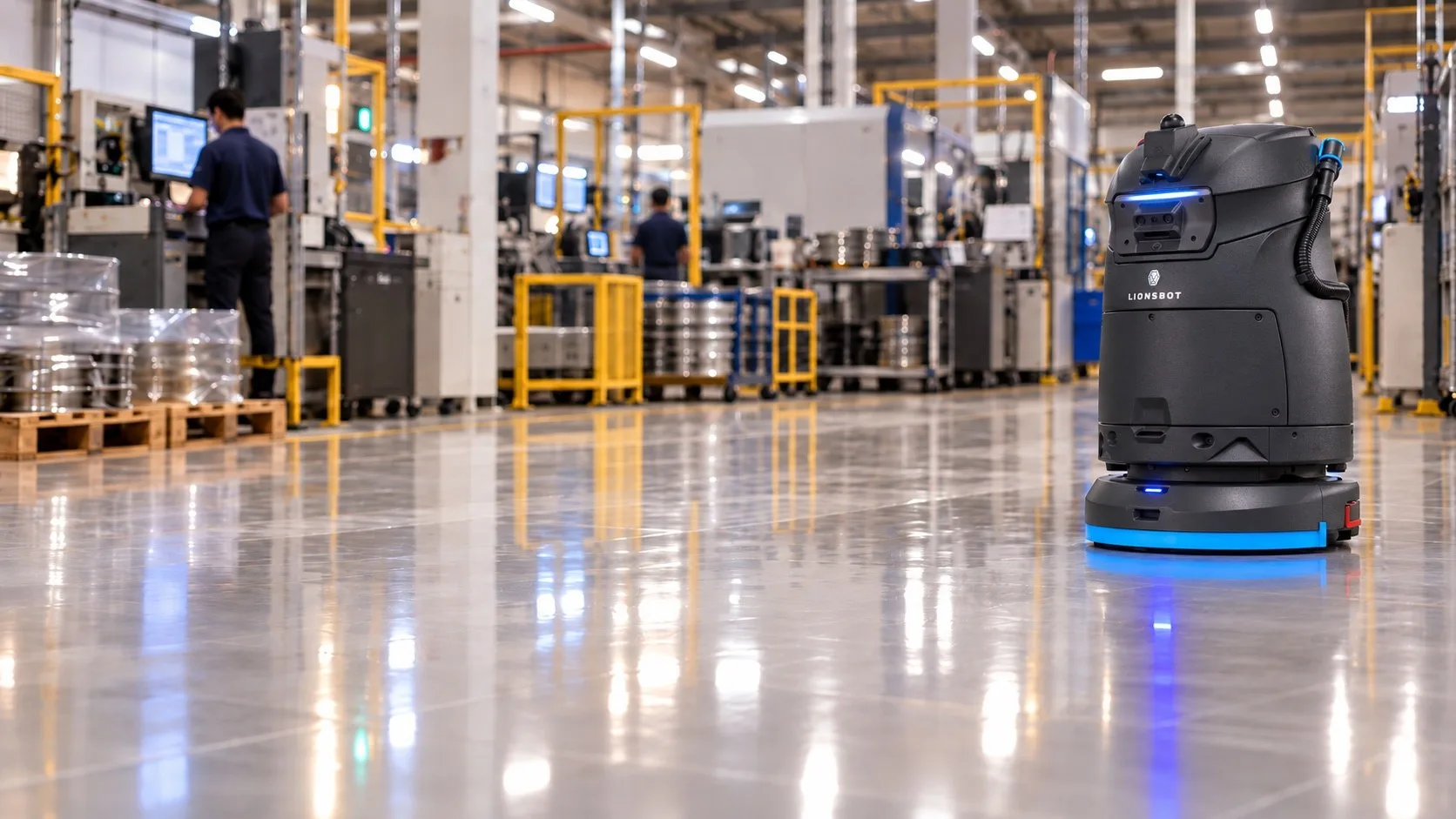
Industrial cleaning robots that work around a running line.
R5 scrubbers take oil, swarf and chemical residue off the floor between shifts, without stopping production. Every pass leaves a logged record.
What a production floor demands.
LionsBot supplies autonomous cleaning robots to industrial, manufacturing and production sites.
A production floor carries what the process leaves on it: oil, swarf, dust and chemical residue, on a surface that has to stay safe to walk on while the line runs. R5 scrubbers work it on a saved route, and every pass is logged in LionsCloud.
The line does not stop for cleaning.
Production schedules decide when the floor is free, and that window moves.
A saved route runs in the window it is given and picks up where it left off. Cleaning fits the schedule instead of competing with it.
Oil, swarf and fine dust.
What ends up on the floor is whatever the process sheds, and a dry sweep smears most of it.
The R5 scrubs and dries in one pass, so the floor is walkable behind it rather than wet and marked.
A hygiene audit asks for evidence.
BRC, SQF and GMP audits in food and pharma ask when an area was last cleaned, and by what.
Every pass writes its own coverage log in LionsCloud with the zone, the time and the area covered. The robot does not hold the certification; it produces the record the audit asks for.
Shift handover is verbal.
What got cleaned at the end of a shift is usually whatever the last team remembers.
Every run writes its own coverage log in LionsCloud. The next shift reads a record instead of asking.
The floor plan changes with the product.
A line is re-tooled, a cell moves, and last quarter’s route runs into a new machine.
Our robots detect what has moved and drive around it. When a change is permanent, the cleaning zones are re-taught on site with MagicTag™.
Sealed concrete needs pressure.
A wet pass does not lift ground-in residue or the marks a pallet truck leaves.
The R5 brush presses down with up to 29 kg of force. That is the published maximum for the machine. It is the scrubber for floors with heavy traffic.
A worked example
A 6,000 m² production floor, cleaned between shifts.
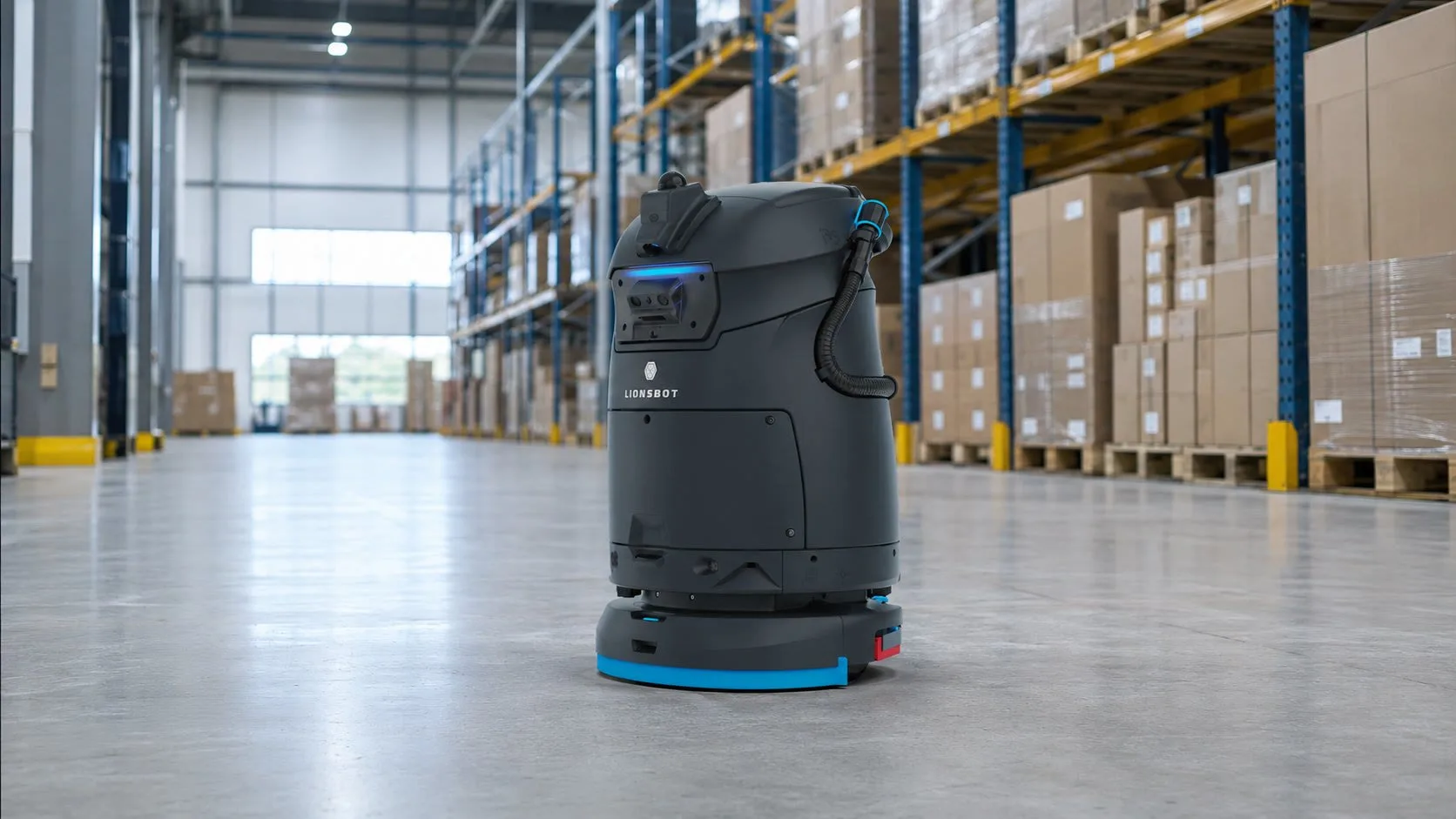
Manufacturing · illustrative figures
Take a 6,000 m² production floor that has to be walkable at the start of every shift, carrying whatever the process shed during the last one.
The R5 scrubs and dries in one pass at its published 1,300 m² an hour, on a saved route, in the changeover window between shifts.
About four and a half robot hours a day, and the floor is walkable behind the machine rather than wet. Every pass leaves a record with the zone, the time and the area covered.
- 6,000m²Production floor in the example
- 1Pass to scrub and dry
- ~4.6hOf scrubbing a day, robot hours
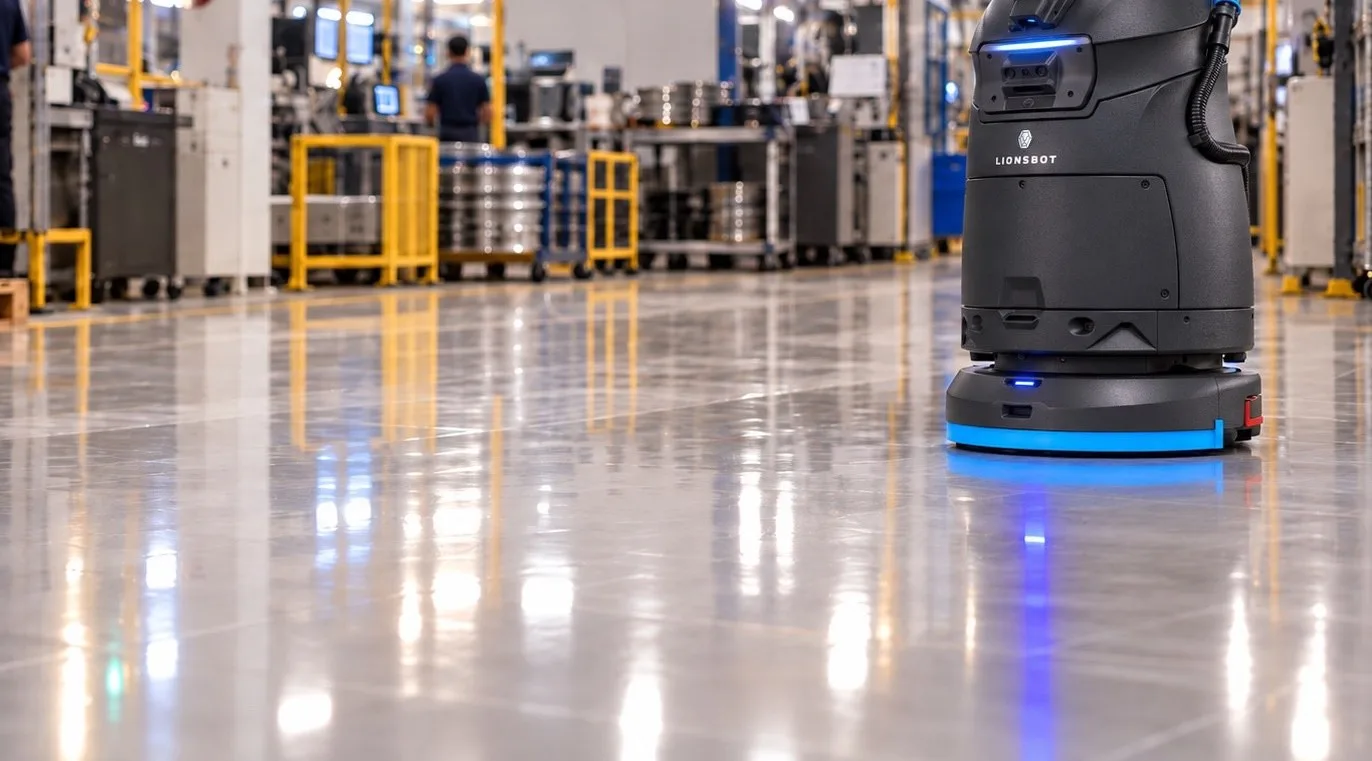
On the production floor
The line keeps running while the floor gets cleaned.
No line stoppage and no cordons. The robot takes the floor in the window it is given and hands it back dry. Every pass writes its own record.
Which robot
Not every production floor needs the same machine.
Select all the floors you have
Most sites have more than one kind of floor, and the range is built to be mixed. All three are below.



LionsCloud runs across the full range
LionsCloud
The floor's own logbook.
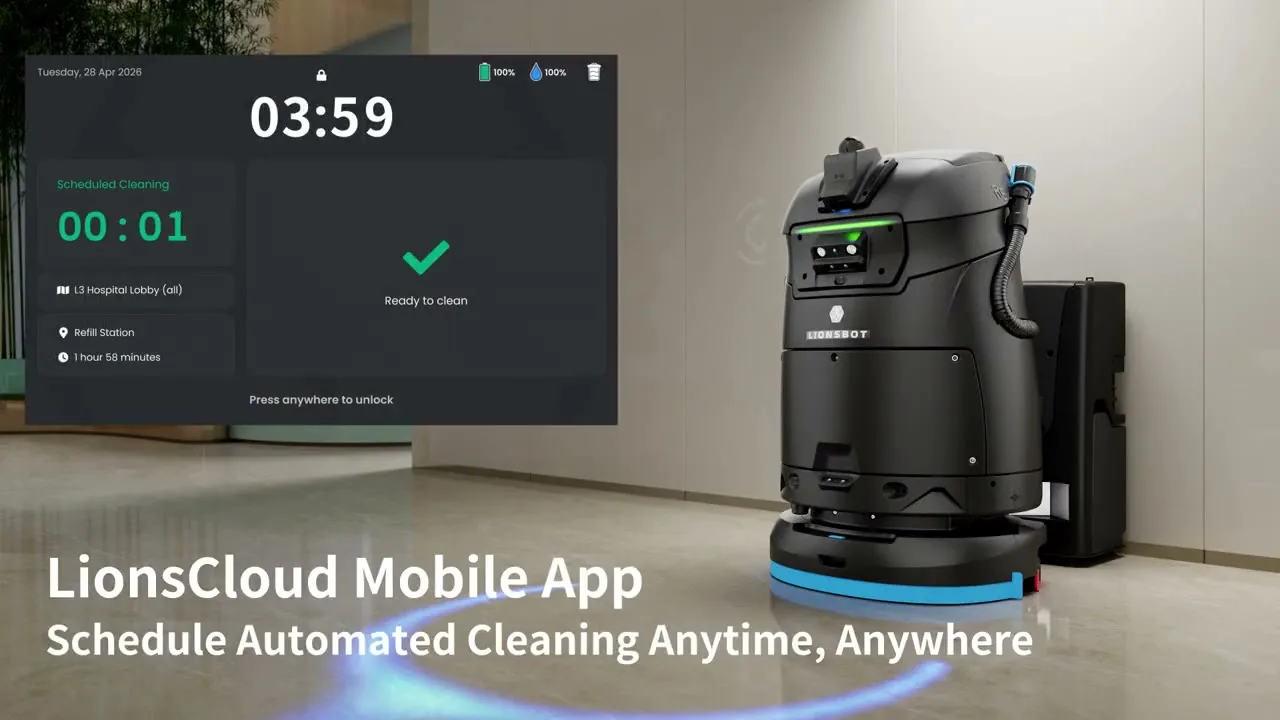
LionsCloud is LionsBot's fleet software. Every run records what was cleaned, when, and how much area was covered. The next shift reads a record instead of asking.
- Schedule production zones once and let the fleet repeat them
- Automatic coverage logs for every completed run
- One view across every site you run
Questions we hear from production and plant managers.
Can the robots clean while the line is running?
Yes, on the floor around it. The R5 runs a saved route and detects people, pallet trucks and anything parked where it should not be, drives around them and returns to its route. It cleans the walkways and open floor while production continues; it does not clean inside machinery.
What does it do about oil, swarf and chemical residue?
The R5 scrubs and dries in one pass rather than pushing residue around, with up to 29 kg of brush downward force and up to 34 g/cm² of cleaning pressure. Those are the published maximums for the machine. The floor is walkable behind it instead of wet and marked.
Does this help with a BRC, SQF or GMP audit?
It gives you the record those audits ask for. Every pass is logged in LionsCloud with the zone, the time and the area covered, and the report downloads as evidence of when an area was last cleaned. The robot itself does not hold a food or pharmaceutical certification.
How much production floor can one robot cover?
The R5 covers up to 5,000 m² on a single charge. Its average rate is 1,300 m² per hour and its maximum is 2,059 m² per hour. It runs for up to 4 hours 20 minutes and recharges in 3 hours 30 minutes.
What happens when we re-tool and the floor plan changes?
The robot detects what has moved and drives around it. When a change is permanent, the cleaning zones are re-taught on site with MagicTag, which takes minutes and needs no programming.
Put the seven-day cycle on your floor.
Dealers and distributors
An assigned territory, dealer margins and a programme built by people who ran a cleaning business for twenty years.
Dealer programmeYou clean it under contractCleaning contractors
Calculate the hours a robot returns, using your own figures. Then tell us how many sites you clean.
Contractor enquiryYou run the siteFacility and operations managers
Tell us your floor area, how many sites you manage and who cleans them today. We will size a fleet against it.
Facility manager enquiry